How Long to Stay in a Sauna
August 28, 20265 min readSauna, Science
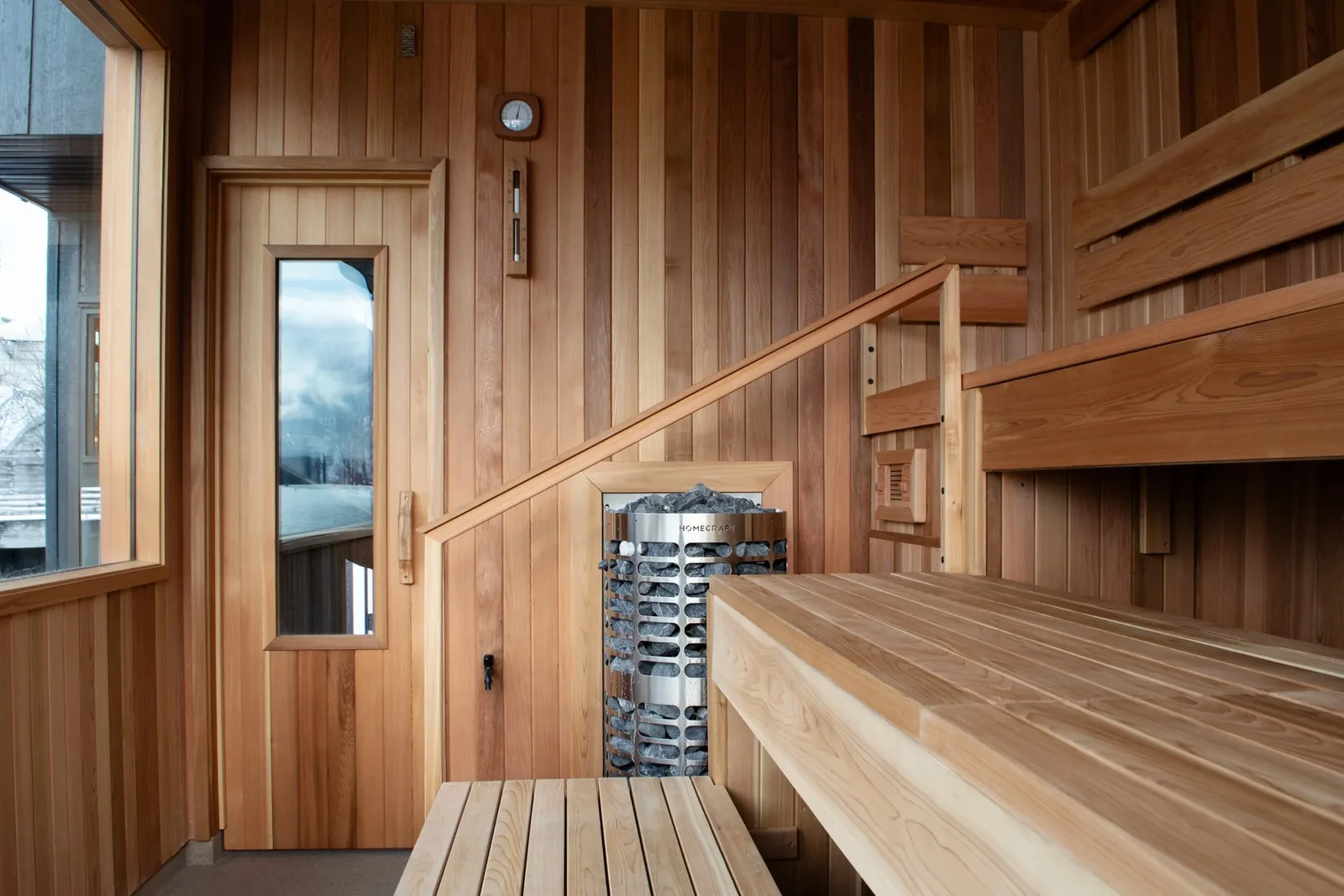
Ten minutes reads like nothing on a page. It reads very differently when you are sitting on a cedar bench at 90 °C, watching the thermometer and wondering whether anyone would notice if you left early. What most people want before a first session is a sense of what normal looks like. So here is the range regulars settle into, how hot the room should be, and how to tell when you are done.
The Short Answer, and Then the Real One
If you want a number to work from, ten to fifteen minutes is the one most people land on. Long enough for the heat to do something. Short enough that you are not sitting on the bench negotiating with yourself about whether you can last another thirty seconds.
The honest version of the answer is that it depends on how hot the room is, how you slept, what you ate, and how your body happens to be feeling that day. Which is a frustrating thing to hear when you are new and you just want to know what normal looks like. So start with the number, then adjust from there.
Ten to Fifteen Minutes, Give or Take
At a standard Finnish sauna temperature, most people are properly sweating by about the five minute mark. Somewhere between ten and fifteen minutes, they have had enough. Your heart rate climbs a little, similar to a brisk walk, and your body starts working hard to cool itself down.
If it is your first time, start closer to eight minutes. You can always go back in for a second round, and you will enjoy it a lot more than white-knuckling your way through a long first one. There is no prize for sitting longer than everybody else, and the people who look like they are suffering usually are.
What you are really after is being hot enough that the cold plunge afterwards lands properly. That takes less time than you would think.
How Hot is a Sauna Supposed to Be?
A traditional Finnish sauna runs somewhere between 70 and 100 °C, and most sit in the 80 to 95 range. Ours runs at 85 to 95 °C. Humidity stays low, usually under 20 percent, which is the reason you can sit comfortably in air hotter than boiling water. Dry heat moves into your body much more slowly than wet heat does. It is also why a steam room at 45 °C can feel more punishing than a sauna at 90.
Heat rises, so where you sit matters more than people expect. There can be a twenty degree difference between the top bench and the bottom one. If the top feels like too much, move down a level. Nobody is watching, and if they are, that is their problem.
Knowing When to Get Out
The clock is a guideline. Your body is the actual instruction. Get out if you feel dizzy or lightheaded, if your heart is pounding in a way that feels wrong rather than simply fast, if you have stopped sweating, or if you find yourself thinking about leaving more than you are thinking about anything else.
That last one counts as a reason on its own. You do not need to justify it to anyone.
How Many Rounds, and How Long the Whole Thing Takes
The usual rhythm is heat, then cold, then rest, repeated two or three times. Your second round almost always feels easier than your first, because your body has figured out what is happening and adjusted. The third is often the best one of the session, when the heat stops feeling like a challenge and starts feeling like somewhere you would happily stay.
After three rounds most people are finished. A fourth tends to be more about not wanting the session to end than about anything your body is asking for.
Budget about 90 minutes if you want to do it properly. That covers changing, three rounds with real rest in between, and drying off afterwards without rushing. Our sessions are 90 minutes for exactly that reason, and the full price list starts at $45 for a single visit.
Once a Week or Every Day?
Once a week is plenty to notice you feel better. Twice or three times a week is where most regulars land, and it is a realistic habit to keep through a Canadian winter.
The research people quote on sauna and heart health comes mostly from long-running Finnish studies, where the strongest results showed up in people using a sauna four or more times a week. That is a serious commitment, and worth knowing about, but it is not a threshold below which nothing counts. Going once a week beats reading about going.
Small Things That Make the Session Better
Drink water before you go in. You will sweat out more than you are expecting, and arriving dehydrated is the quickest route to feeling terrible halfway through your second round.
Leave the alcohol alone. Heat and drinking put competing demands on your heart, and the combination is genuinely risky rather than simply unwise.
Sit on a towel, feet included. Every sauna asks for this, and it is about hygiene as much as comfort. Bring two of them, one for the bench and one for drying off after the cold.
Breathe normally. There is no technique to learn. If you notice you are holding your breath, you are probably hotter than you want to be, and it is time to step out.
Planning a First Visit
Pack a swimsuit and two towels. That really is the list.
In Ottawa, the sauna floats on the Ottawa River, with an enclosed plunge off the deck and open water access for anyone who wants the real thing. There are no showers on site, so plan to rinse in the river. The Ottawa location opens in October.
In Toronto, we are on the harbourfront at 275 Queen’s Quay West, with a cold plunge tub on the deck and cold showers on site. That one opens in November.
New guests can try three sessions for $99, which is enough to work out your own number for how long to sit, and whether the top bench is for you.

New guests only
3 Sessions for $99
Use all three yourself, or bring a guest along. The easiest way to find out whether heat and cold are for you.
$135
You save $36
Get the Offer